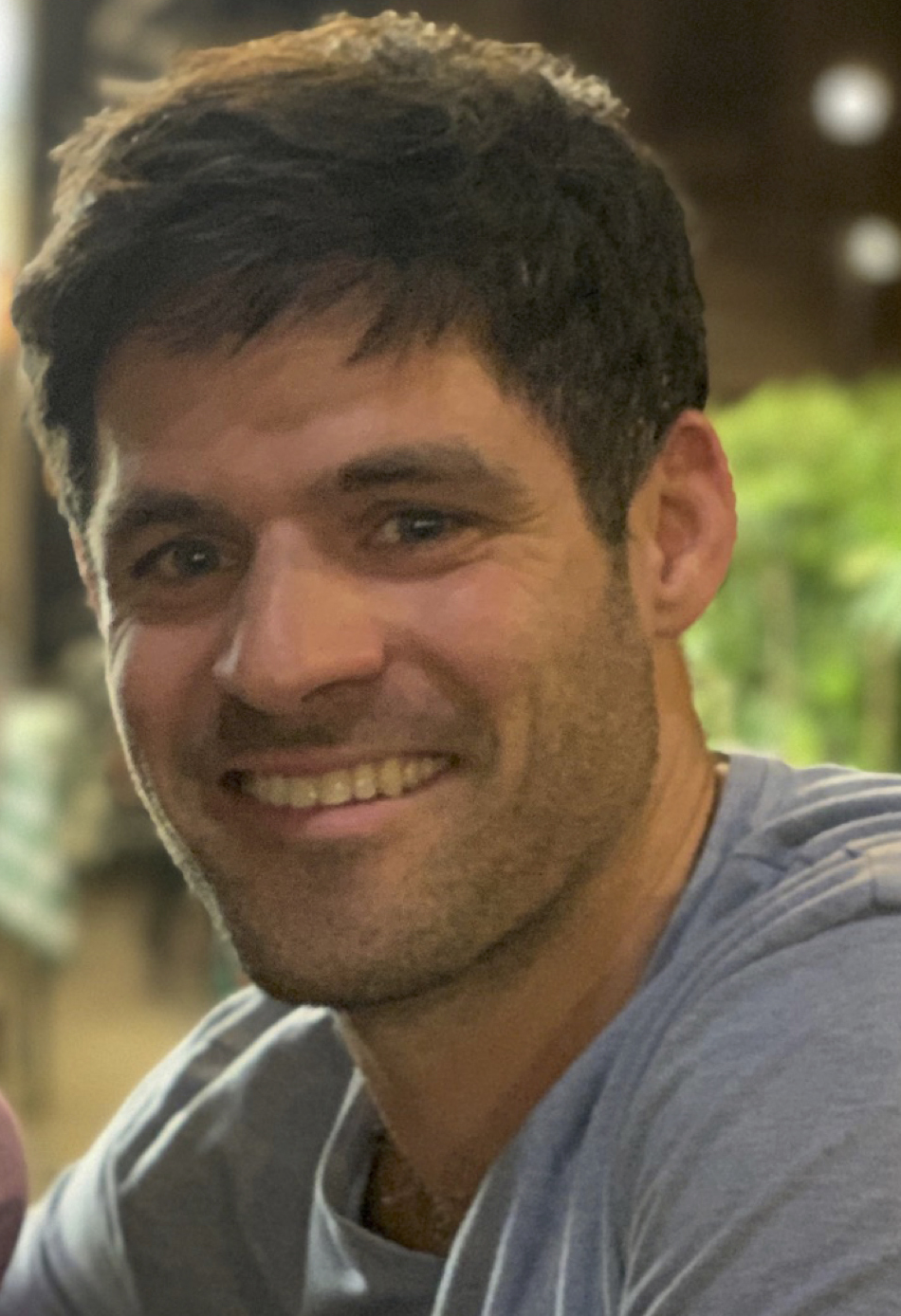
Bio
I'm Alexander (Alex) Scheinker. I lead the Adaptive Machine Learning team at Los Alamos National Laboratory, and I work on generative AI for systems that change with time.
My research builds model-free adaptive feedback from control theory into generative models. The feedback tunes the latent variables and conditioning inputs of a trained diffusion model or autoencoder, so the model tracks a time-varying system through distribution shift at test time, from limited measurements, with no retraining and no gradients through the model. In machine-learning terms, this is closed-loop, gradient-free test-time adaptation. The feedback algorithm is bounded extremum seeking, a zeroth-order method that I developed for stabilizing and optimizing unknown, time-varying systems, and that I have applied to particle accelerators and to 3D imaging for materials science. My recent work covers gradient-free sampling from generative models and test-time uncertainty estimates for autoregressive diffusion rollouts.
Bounded Extremum Seeking: Stabilizing and Optimizing Unknown Systems.
I invented an adaptive feedback algorithm known as Bounded Extremum Seeking which can optimize the outputs of or stabilize analytically unknown time-varying nonlinear dynamic systems with analytically unknown output functions.
And later proved this algorithm works with arbitrary measurable dithers (not required to be differentiable or continuous).
Autonomous Particle Accelerators: Adaptive Control of Particle Accelerators and Adaptive Machine Learning for Virtual Beam Diagnostics.
I have applied this algorithm to particle accelerators around the world (at LANL, SLAC, CERN, LBNL, BNL, and DESY) for autonomous beam tuning and virtual 6D beam diagnostics, and for material science applications for 3D dynamic imaging.
Adaptive Latent Space Tuning: Adaptive Control of Latent Space Dynamics.
I developed a method of adaptive latent space tuning, for controlling the latent dynamics of generative models, to make them robust for time-varying systems.
Bidirectional autoregressive models can predict their own rollout errors.
Recently, I developed a general method which allows generative autoregressive models to estimate their own rollout errors at test time when the ground truth is not available. This general method is applicable to generative diffusion models, flow models, and any other autoregressive rollout approach.
About Me
I have a PhD in Control Theory and Masters degrees in Math and Physics. I am the Adaptive Machine Learning Team Leader at Los Alamos National Laboratory and a Research Affiliate at Lawrence Berkeley National Laboratory.
Recent Work
Gradient-free sampling from energy-based and score-based generative models: bounded extremum seeking replaces the score term with a high-frequency dithered cosine of the model's value, so sampling needs no gradient evaluations of the model. The approach is aimed at latent-space sampling when the model is a black box and the target drifts in time.
Adaptive generative diffusion models for time-varying systems and round-trip consistency, a self-supervised test-time method for generative autoregressive models to predict their own rollout errors without access to ground truth.